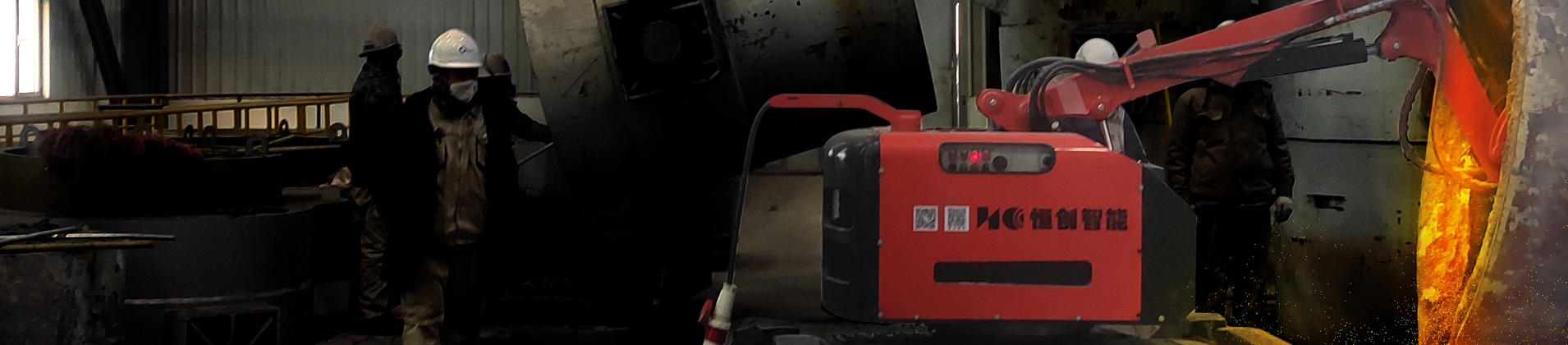
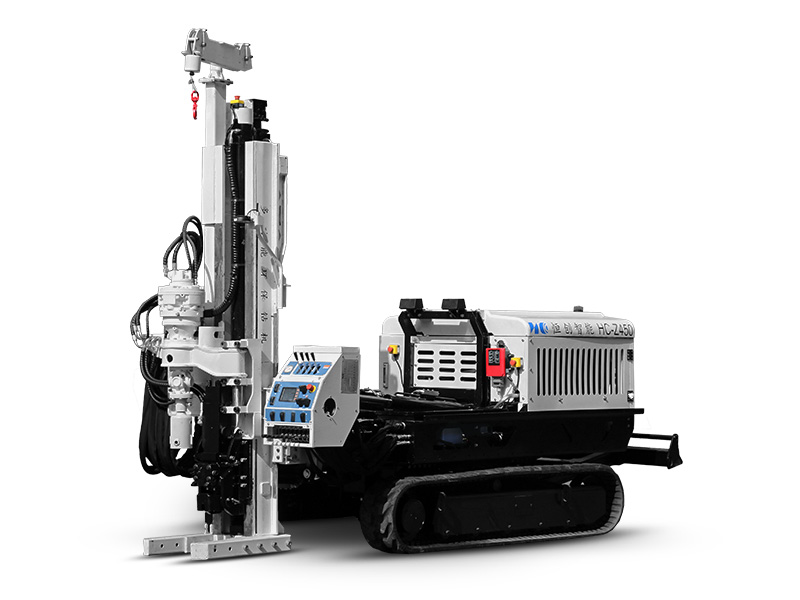
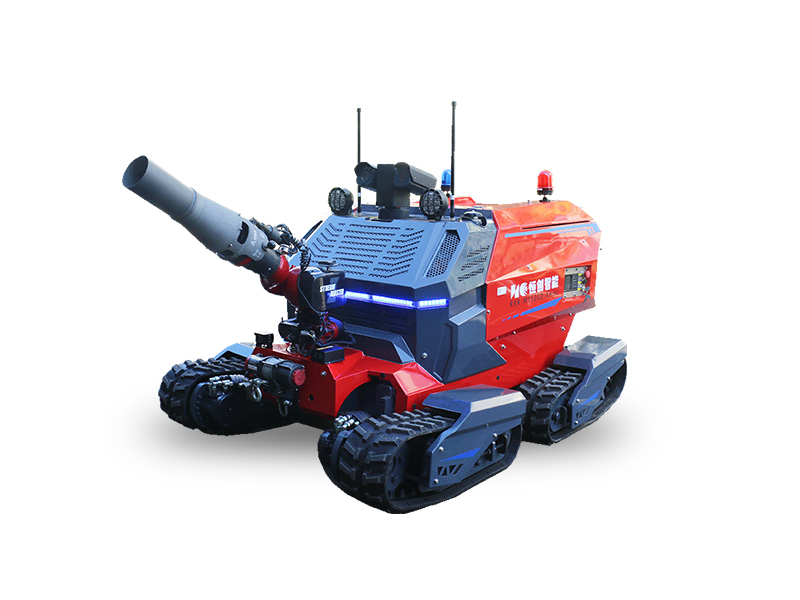
In modern construction and industrial renovation, the demolition robot has become one of the most important innovations for improving safety, precision, and productivity. As projects move into tighter spaces, more hazardous environments, and more technically demanding structures, traditional demolition methods often struggle to deliver the same level of control. This is where robotic demolition is changing the industry.
From tunnel refurbishment and furnace maintenance to concrete removal inside hospitals, basements, and factories, the robotic demolition machine is proving that smaller, smarter equipment can often outperform larger conventional tools. In particular, robotic arm demolition is gaining attention for its ability to work in confined, elevated, and dangerous areas where manual labor or heavy machinery may not be practical.
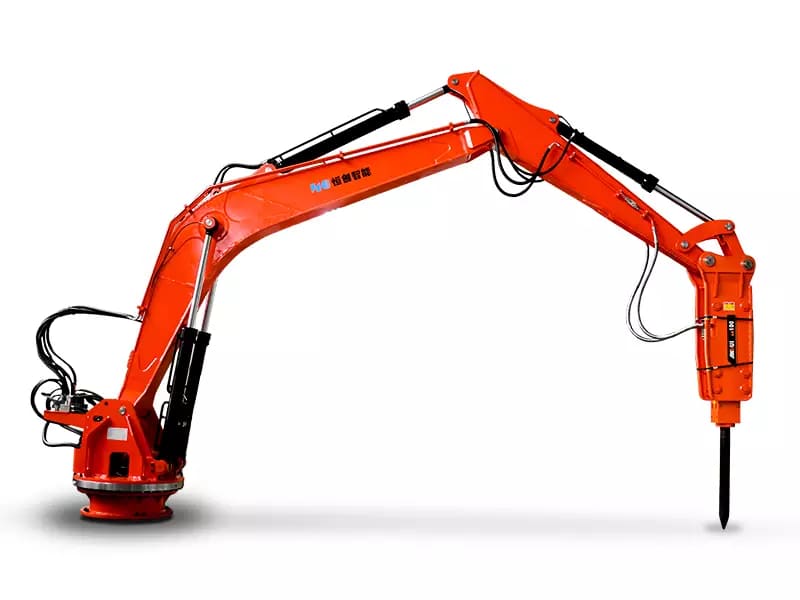
Robotic arm demolition refers to the use of remotely operated demolition robots equipped with articulated arms and specialized attachments, such as hydraulic breakers, crushers, shears, buckets, and scabblers. These machines are designed to perform controlled demolition tasks while the operator remains at a safe distance.
Unlike conventional excavators, a demolition robot is typically more compact, lighter in weight, and easier to maneuver indoors or in structurally sensitive environments. The robotic arm provides flexibility and a wide working range, allowing operators to break, crush, chip, and remove material with high accuracy.
This approach is especially useful in projects that require selective demolition rather than full structural teardown. Instead of damaging surrounding areas, operators can remove only the target material, reducing waste and minimizing rework.
The growth of robotic demolition is driven by several practical factors.
Demolition often exposes workers to serious hazards such as falling concrete, dust, vibration, unstable structures, toxic materials, and heat. A robotic demolition machine helps reduce direct human exposure by allowing operators to work remotely.
This is particularly valuable in places such as:
Nuclear facilities
Chemical plants
Underground tunnels
Mines and quarries
Furnace and kiln areas
Fire-damaged buildings
In these environments, keeping workers away from the demolition face is a major safety advantage.
Many modern demolition projects take place in locations where large excavators cannot enter. Hospitals, shopping centers, stairwells, rooftops, parking structures, and narrow industrial corridors all present access limitations.
A compact demolition robot can pass through standard door openings, operate on upper floors with lower floor-loading impact, and reach difficult angles through its articulated arm. This makes robotic arm demolition ideal for interior strip-outs, partial concrete removal, and renovation work in confined areas.
In selective demolition, accuracy matters. Contractors may need to remove a wall section, cut around embedded utilities, or demolish part of a structure without affecting the rest. A robotic demolition machine offers fine movement control that is difficult to achieve with larger equipment.
This higher precision helps reduce accidental damage, improve finish quality, and make downstream construction activities easier. It also supports projects where vibration and noise must be controlled as much as possible.
Although a demolition robot may look small compared with traditional machines, it can deliver impressive breaking force relative to its size. In many specialized applications, it improves productivity because it can work continuously in areas where manual demolition would be slow, labor-intensive, and physically exhausting.
With the right attachment, one machine can handle multiple tasks, including breaking concrete, crushing walls, removing refractory lining, and clearing debris. This versatility helps contractors improve equipment utilization across different job types.
The expansion of robotic demolition is closely tied to the variety of applications it can serve.
In commercial renovations, old interiors often need to be stripped without damaging the main structure. A demolition robot can efficiently remove slabs, staircases, partition walls, and localized concrete sections while working in confined indoor spaces.
Factories, cement plants, smelters, and power facilities often need demolition during maintenance shutdowns. In these environments, robotic arm demolition allows faster removal of worn linings, damaged concrete, and obsolete structures while reducing worker exposure to dust, heat, and unstable surfaces.
In tunnels, mines, and other underground spaces, access is limited and safety is critical. A compact robotic demolition machine can perform scaling, breaking, and sectional removal more effectively than larger machines that lack maneuverability.
Not every demolition project involves full teardown. Sometimes the goal is to remove damaged concrete, expose rebar, or prepare surfaces for repair. A demolition robot is well suited for precise structural rehabilitation because it supports controlled material removal.
Compared with handheld breakers, a demolition robot greatly reduces physical strain and improves consistency. Workers are not forced to spend long hours under vibration-heavy, high-fatigue conditions, and operators can often cover more area in less time.
Compared with excavators, robotic demolition offers better maneuverability, lower machine weight, and improved access in confined environments. Excavators remain essential for large open-site demolition, but in hard-to-reach or structurally sensitive jobs, a robotic demolition machine often provides a more practical solution.
Compared with manual labor alone, robotic arm demolition also improves project planning. Contractors can better predict output, reduce workforce exposure, and create safer workflows for specialized demolition phases.
When selecting a demolition robot, buyers should focus on actual job requirements rather than headline specifications alone. Important considerations include:
Size and transport dimensions
Arm reach and working height
Power source and site compatibility
Attachment options
Stability and control system
Service access and maintenance support
Performance in dust, heat, or rough conditions
A good robotic demolition machine should match the site environment, demolition material, and expected daily workload. For example, a machine used in tight interior renovation may need compact dimensions and low floor pressure, while a unit for industrial demolition may require stronger breaker performance and durable protection systems.
The future of robotic demolition is closely connected to broader industry trends: safer job sites, labor efficiency, stricter environmental controls, and smarter equipment deployment. As contractors face increasing pressure to reduce risk and improve precision, demand for demolition robot solutions will likely continue to grow.
At the same time, improvements in remote control systems, hydraulic performance, attachment flexibility, and machine durability are making robotic arm demolition more attractive to a wider range of users. What was once considered specialist equipment is now becoming a practical tool for many demolition and renovation contractors.
The rise of robotic arm demolition reflects a major shift in how the industry handles dangerous, complex, and access-limited work. A modern demolition robot offers safer operation, better precision, and stronger performance in environments where conventional methods fall short. Whether the task involves industrial maintenance, selective concrete removal, or work in confined spaces, robotic demolition and the right robotic demolition machine can help contractors achieve smarter, more efficient results. To explore more solutions in this field, visit https://www.hcrot.com/