In recent years, the firefighting robot has moved from experimental technology to a practical tool deployed in real-world emergencies. As fires become more complex—driven by dense urban environments, chemical hazards, large industrial facilities, and extreme weather—traditional firefighting methods increasingly expose human firefighters to life-threatening risks. This is where robotic firefighting systems step in, offering a safer, smarter, and more resilient way to combat dangerous fires.
This article explores how a firefighting robot, also known as a fire robot or robotic firefighter, improves safety in hazardous environments. We will examine their core capabilities, key technologies, real-world applications, and the ways they complement human firefighters rather than replace them.
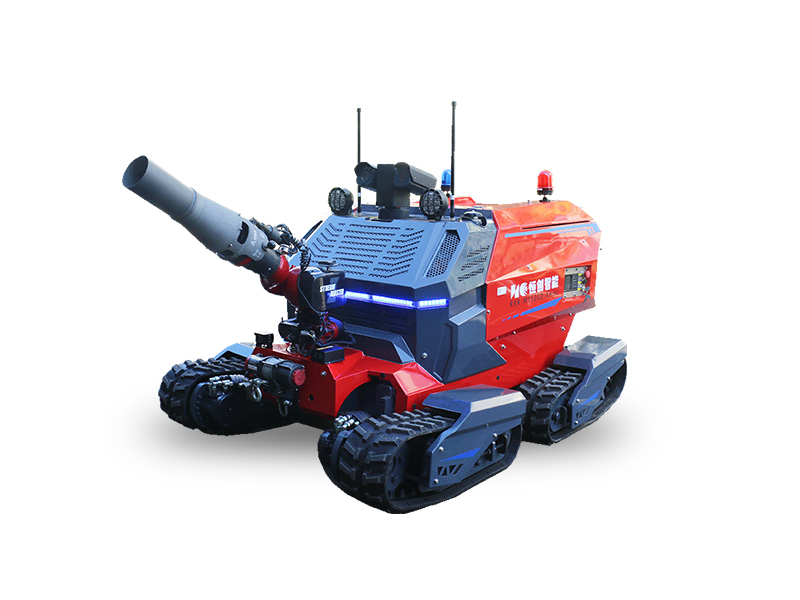
A firefighting robot is a remotely operated or autonomous machine designed to assist in fire detection, suppression, rescue, and hazard assessment. Unlike traditional equipment, these robots can enter environments that are too dangerous or inaccessible for humans.
Fire robots are commonly used in:
Industrial fires (oil, gas, chemical plants)
High-rise building fires
Tunnel and subway fires
Nuclear facilities
Wildfire-prone zones
Explosive or toxic environments
By leveraging robotic firefighting technology, emergency responders can gather critical information and suppress fires while minimizing direct human exposure.
Fire scenes are unpredictable and hostile. High temperatures, toxic smoke, collapsing structures, and explosive materials create conditions where human reaction time and endurance are limited. Even the most experienced firefighters face severe risks.
A robotic firefighter directly addresses these challenges by:
Operating in extreme heat
Withstanding toxic gases
Navigating debris-filled environments
Remaining functional for extended periods
This ability to function where humans cannot is the foundation of how firefighting robots improve safety.
One of the most immediate benefits of a firefighting robot is its resistance to high temperatures. Many fire robots are built with heat-resistant alloys, ceramic insulation, and advanced cooling systems.
In hazardous environments:
Robots can approach flames directly
Thermal cameras allow precise targeting
Continuous operation is possible without fatigue
This reduces the need for firefighters to enter flashover-prone zones, significantly lowering the risk of burns and heat exhaustion.
Smoke inhalation is one of the leading causes of firefighter injury and death. Fires often release carbon monoxide, hydrogen cyanide, and other lethal gases.
A robotic firefighter:
Does not require oxygen
Is immune to toxic inhalation
Can operate in sealed or underground spaces
Using robotic firefighting systems for reconnaissance allows human teams to understand gas concentrations and structural conditions before entry, improving situational awareness and safety planning.
Collapsing buildings and weakened infrastructure are major hazards during fires. Floors, ceilings, and walls may fail without warning.
A fire robot can:
Enter unstable structures first
Map debris and structural integrity
Identify safe access routes
This intelligence helps commanders decide whether human entry is viable or whether robotic firefighting should handle suppression entirely.
Industrial facilities often store flammable liquids, pressurized gas cylinders, or explosive chemicals. Approaching these hazards manually is extremely dangerous.
Robotic firefighting systems improve safety by:
Delivering water, foam, or dry chemicals from a distance
Cooling explosive containers to prevent detonation
Removing hazardous objects using robotic arms
By deploying a firefighting robot, emergency teams can control escalation without risking human lives.
Modern robotic firefighter platforms are equipped with advanced sensors, including:
Thermal imaging cameras
LIDAR mapping systems
Gas detectors
Acoustic sensors
These tools provide real-time data that humans alone cannot safely obtain. Fire commanders can analyze heat patterns, locate trapped victims, and identify fire spread paths before committing personnel.
Industrial fires often involve hazardous materials and prolonged burning. A firefighting robot can remain on-site for hours, applying suppressant continuously and monitoring conditions without fatigue.
In collapsed buildings or confined urban spaces, robotic firefighting units can search for survivors while reducing risk to rescue teams.
Smoke-filled tunnels are notoriously dangerous. Robotic firefighting systems can navigate rail tracks and confined corridors, delivering suppression and surveillance.
While not replacing aerial or ground crews, a fire robot can support wildfire containment by operating near intense heat zones and protecting critical infrastructure.
Most firefighting robots today are remotely operated. Human operators guide the robot using video feeds and sensor data, allowing expert judgment in complex scenarios.
Advantages:
Human decision-making
Lower risk of automation errors
Immediate tactical adjustments
Emerging robotic firefighting systems use AI and machine learning to navigate and suppress fires autonomously.
Advantages:
Faster response time
Continuous operation
Reduced operator workload
In practice, hybrid models combining autonomy with human oversight offer the highest safety and reliability.
A common misconception is that a robotic firefighter will replace human firefighters. In reality, firefighting robots act as force multipliers.
They:
Perform initial reconnaissance
Handle extreme-risk tasks
Extend operational reach
Improve decision-making quality
Human firefighters remain essential for rescue, strategic planning, and complex judgment. Robotic firefighting technology simply ensures they can do their jobs with lower risk.
Despite their advantages, firefighting robots are not without challenges:
High acquisition and maintenance costs
Limited mobility in highly cluttered environments
Dependence on communication links
Training requirements for operators
However, as technology matures, these limitations continue to shrink, making firefighting robots increasingly accessible and reliable.
The future of robotic firefighting lies in:
AI-driven decision-making
Swarm robotics for large-scale fires
Improved battery life and power systems
Integration with smart city infrastructure
As climate change increases fire frequency and intensity, the role of the firefighting robot will only grow in importance.
A firefighting robot dramatically improves safety in hazardous environments by reducing human exposure to heat, toxic gases, unstable structures, and explosive materials. Through advanced sensors, remote operation, and autonomous capabilities, robotic firefighters provide critical intelligence and suppression power when human entry is too dangerous.
Rather than replacing firefighters, robotic firefighting technology empowers them to operate more safely, effectively, and strategically. As innovation continues, the integration of fire robots into emergency response will become not just beneficial—but essential.
1. Can a firefighting robot replace human firefighters?
No. A firefighting robot is designed to support and protect human firefighters, not replace them. Human judgment and rescue skills remain irreplaceable.
2. How does robotic firefighting improve response time?
Robotic firefighting systems can be deployed immediately into hazardous zones, gathering data and beginning suppression before it is safe for humans to enter.
3. Are firefighting robots used in real emergencies today?
Yes. Fire robots and robotic firefighters are already used worldwide in industrial fires, tunnels, chemical plants, and other high-risk environments.