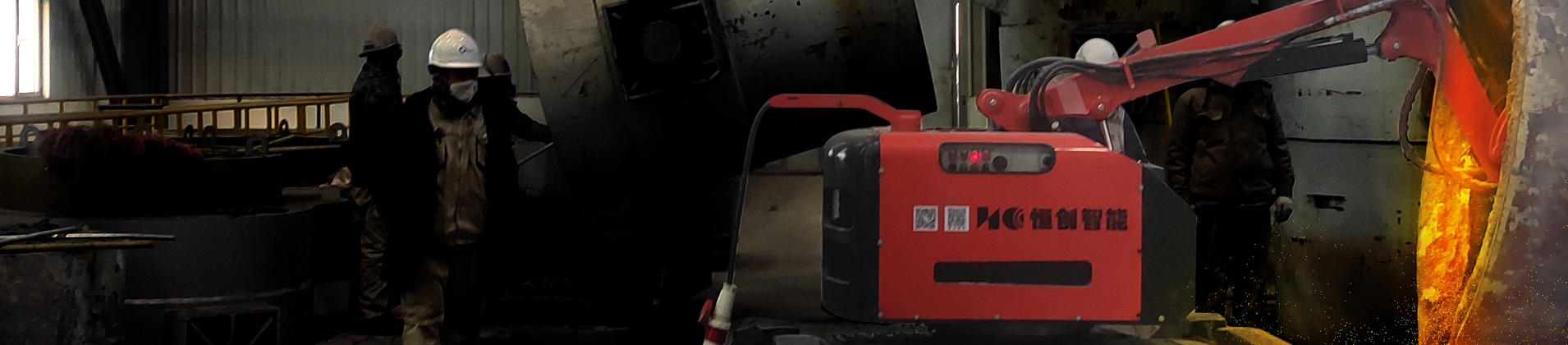
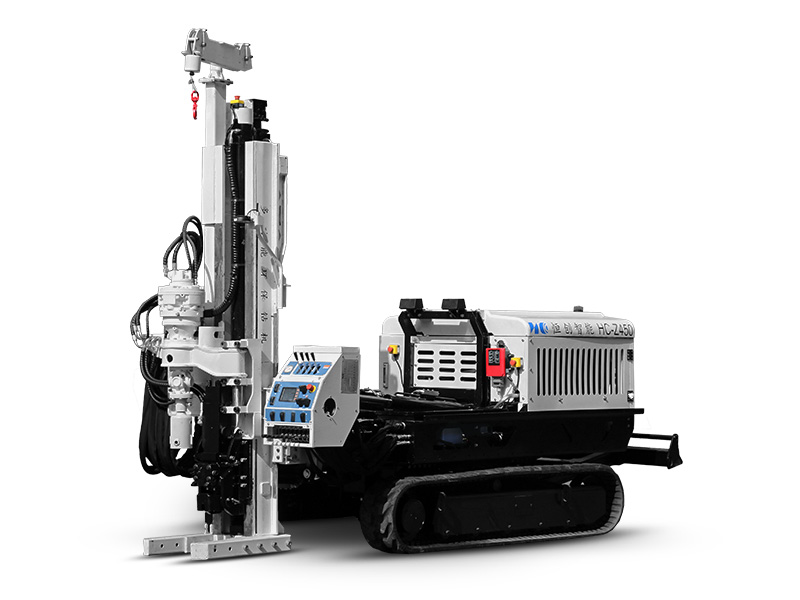
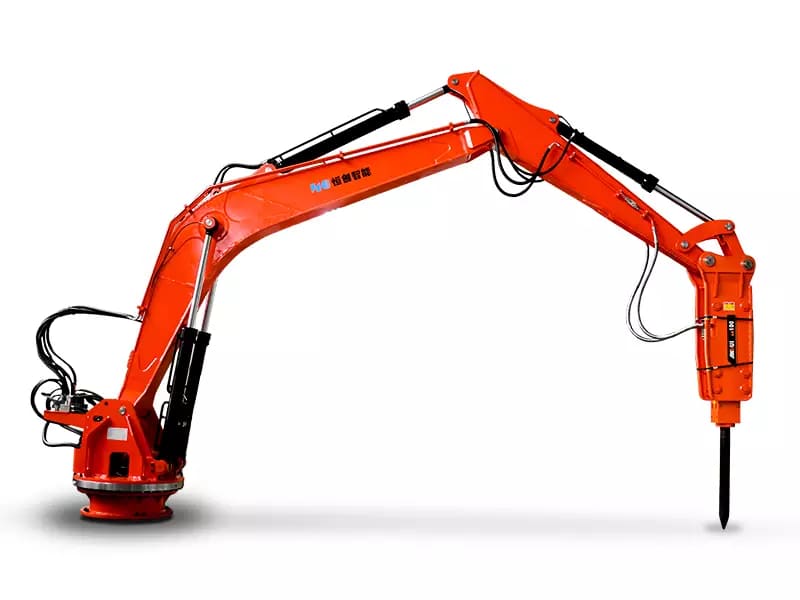
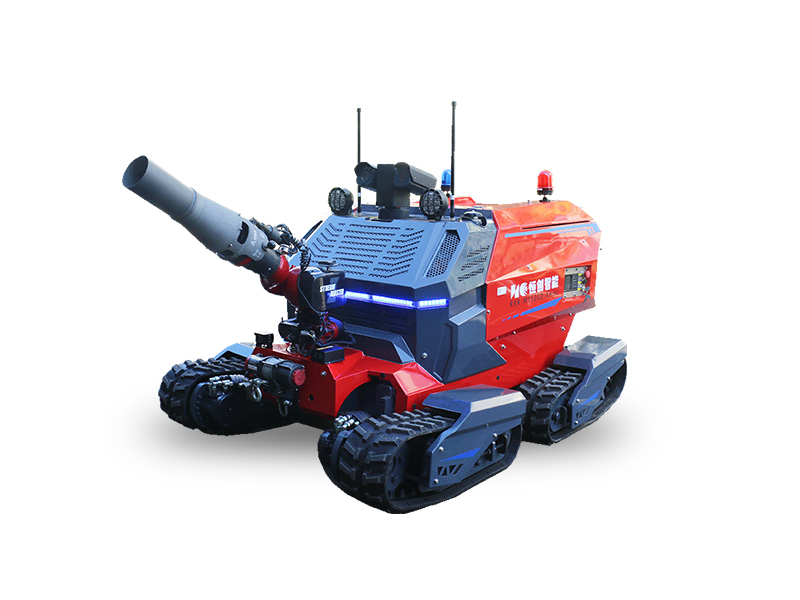
A demolition robot is increasingly becoming the preferred solution for underground projects where access is tight, ventilation is limited, and work must be completed with high precision. In utility tunnel environments, a demolition robot offers a practical balance of power, safety, and maneuverability that traditional large equipment often cannot match. For contractors working in cable corridors, pipe galleries, and water transmission passages, choosing the right demolition robot is not only about breaking force, but also about fitting the machine into the space and minimizing disruption to nearby infrastructure.
Although both are underground structures, utility tunnels and traffic tunnels are built for very different purposes.
Traffic tunnels are designed for moving vehicles or trains. They are usually larger in cross-section, have broader turning space, and are planned around transport flow, fire safety, and evacuation. Equipment selection in these tunnels often allows for larger machines, more support vehicles, and wider work zones.
Utility tunnels are service-oriented spaces. They are typically built to carry power cables, communication lines, water pipes, drainage systems, district heating pipelines, or multiple municipal services in one corridor. This means the tunnel itself is often narrower, lower, and filled with installed or partially installed systems. In these conditions, a demolition robot must work close to walls, corners, ceilings, and sensitive assets.
| Aspect | Utility Tunnels | Traffic Tunnels |
|---|---|---|
| Primary purpose | Carry utilities and pipelines | Carry vehicles or trains |
| Typical space | Narrow and restricted | Wider and taller |
| Ventilation conditions | Often limited | Usually more robust |
| Equipment access | Difficult | Easier |
| Disturbance tolerance | Low | Relatively higher |
| Preferred machine type | Compact underground robot | Mid-size or large equipment possible |
Because of these differences, a compact demolition robot for utility tunnels is often a better fit than conventional excavators or larger breakers.
In underground municipal work, machine size directly affects productivity. A robot for limited tunnel space must be able to enter through small access points, move through narrow corridors, and reposition without repeated manual adjustments. Oversized equipment can create delays, increase damage risk, and make even simple tasks harder.
Compactness matters because:
Access shafts and entry doors are often small
Tunnel widths may not allow wide turning movements
Existing cables, pipes, and brackets reduce usable working space
Work zones may be segmented by partitions, bends, or support structures
Low emissions are equally important. Many utility tunnels have constrained airflow, and diesel exhaust can quickly become a safety issue. In these cases, electric or electro-hydraulic demolition robot systems are highly suitable because they reduce local emissions and improve working conditions for crews.
Low disturbance is another key requirement. Utility tunnel projects often happen near active infrastructure. Vibration, flying debris, noise, and dust must be controlled to avoid damaging cables, supports, waterproofing layers, or adjacent service lines. A compact demolition robot can apply force more precisely and can operate with accessories tailored for selective demolition instead of uncontrolled heavy impact.
A cable tunnel robot is commonly used where electrical or communication lines run through long, narrow underground passages. These jobs often involve:
Local concrete removal for extension or repair
Trimming of walls and slabs
Removing damaged supports or obsolete structures
Opening sections for new cable routing
Working around live or protected cable systems
In cable tunnels, space is usually tight and cleanliness matters. Contractors often need equipment that can work with controlled movement and minimal accidental contact. This makes a compact underground robot especially useful.
A water tunnel demolition robot is suitable for construction and refurbishment in raw water tunnels, drainage passages, utility water galleries, and related chambers. Conditions here may include:
Damp or wet surfaces
Sludge or debris on the floor
Confined access routes
Need for lining removal or surface preparation
Structural trimming around pipe interfaces, valves, or chamber enlargements
Water tunnel work often requires equipment with stable footing, compact dimensions, and attachments that can handle both demolition and surface treatment. In many cases, excessive vibration is undesirable because it may affect nearby linings, joints, or installed pipe systems.
There is no single perfect machine size for every project, but utility tunnel demolition equipment generally performs best when it is compact enough for transport and repositioning while still carrying enough hydraulic power for effective output.
| Tunnel condition | Recommended machine profile |
|---|---|
| Very narrow cable corridor | Ultra-compact demolition robot with narrow width and short tail swing |
| Small access shafts and low headroom | Low-height compact demolition robot |
| Medium utility gallery with several service lines | Compact demolition robot with stable outriggers |
| Wet or uneven water tunnel floor | Compact machine with strong traction and stable chassis |
For many projects, the best choice is not the heaviest robot, but the one with the best ratio of size to usable breaking force. A machine that fits easily into the site and can work continuously often delivers better real productivity than a larger unit that struggles with access and positioning.
Attachments determine whether a demolition robot can handle multiple tunnel tasks efficiently. In utility tunnels, versatility is essential because the same machine may need to break concrete, trim surfaces, remove linings, or prepare openings.
| Attachment | Best use in utility tunnels |
|---|---|
| Hydraulic breaker | Concrete demolition, slab breaking, wall removal |
| Crusher | Controlled removal with less vibration and better material handling |
| Bucket | Debris collection and cleanup |
| Scabbler or milling head | Surface preparation, lining removal, smoothing |
| Rock drill attachment | Anchor holes, bolt holes, controlled drilling tasks |
For cable tunnels, smaller breakers and precise crushers are often preferred because they reduce the risk of collateral damage. For water tunnel demolition robot applications, a breaker plus surface-preparation attachment can be a strong combination, especially in rehabilitation projects.
A demolition robot is especially effective in utility tunnel projects because it combines compact dimensions, remote operation, and attachment flexibility. Compared with traditional equipment, it can:
Improve worker safety by increasing distance from the demolition face
Reduce emissions in poorly ventilated underground environments
Minimize disturbance to nearby cables, pipes, and tunnel linings
Enter and work in spaces where larger machines are impractical
Switch between demolition, trimming, and cleanup tasks with less downtime
For contractors handling cable corridors, pipe galleries, and water infrastructure, a compact demolition robot for utility tunnels is not just a specialized tool. It is often the most efficient way to achieve safe and controlled underground work in restricted conditions.
A demolition robot is often more compact, easier to remote-control, and better suited for selective work in tight underground spaces. It can also use specialized attachments more effectively in restricted environments.
Yes. In many cable tunnel jobs, electric-powered systems are highly suitable because they produce low local emissions and are better aligned with limited ventilation conditions.
That depends on the task. A hydraulic breaker is common for structural removal, while a scabbler, crusher, or milling attachment may be better for rehabilitation, surface preparation, or controlled trimming.
For more solutions in underground demolition and compact robotic equipment, visit https://www.hcrot.com/