In the ever-evolving construction and demolition industry, technology continues to reshape how projects are executed. One of the most significant advancements is the demolition robot, also referred to as a robotic demolition machine or remote control demolition robot. These innovative machines have revolutionized the demolition process, offering safer, more efficient, and precise methods for tearing down structures or removing materials in construction projects. But what exactly is robotic demolition, and why are these machines gaining popularity in the industry? In this article, we’ll explore the concept of robotic demolition, its benefits, applications, and why it is a game-changer for modern construction and demolition projects.
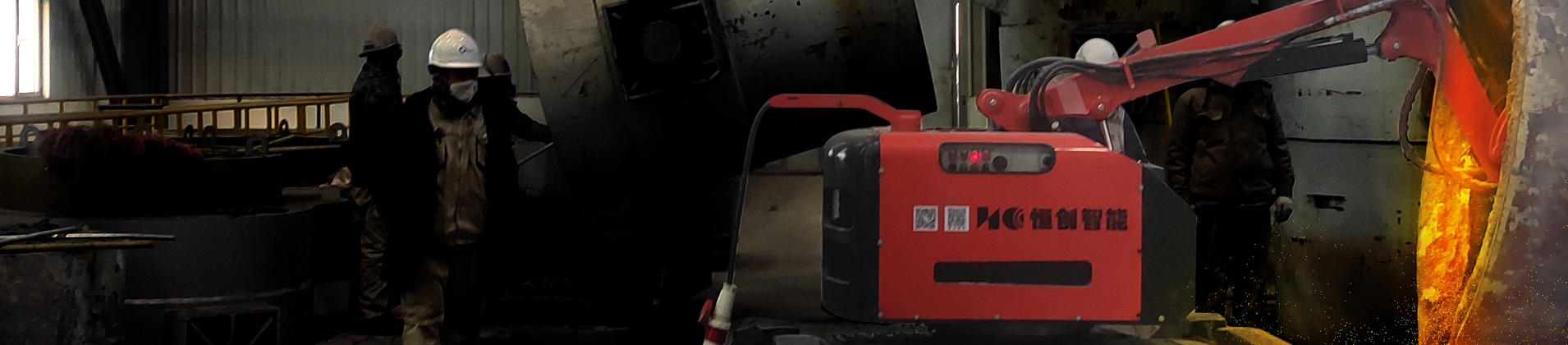
Robotic demolition, at its core, involves the use of demolition robots—mechanical devices designed to perform demolition tasks with minimal human intervention. These machines are typically operated via remote controls, allowing workers to control them from a safe distance. Unlike traditional demolition methods that rely heavily on manual labor or large machinery such as excavators and bulldozers, robotic demolition machines are compact, precise, and versatile.
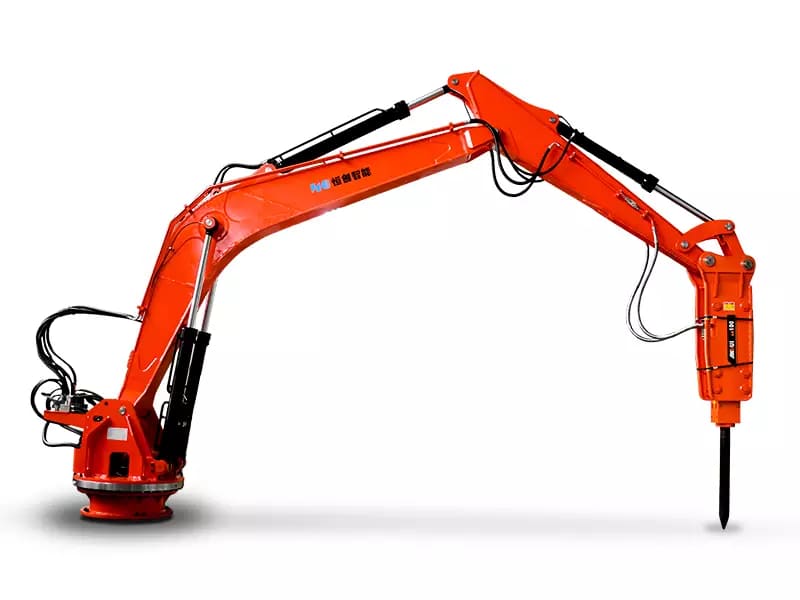
A remote control demolition robot is equipped with advanced features, such as hydraulic arms, specialized attachments (like breakers, crushers, and grapples), and the ability to navigate tight spaces. These machines are designed to access areas that would otherwise be dangerous or impossible for human workers or larger equipment. This makes them an ideal solution for projects in confined spaces, hazardous environments, or locations with strict safety requirements.
Demolition robots are not just robotic arms with breakers attached—they are highly sophisticated machines built to handle a variety of challenges. Here are some of the key features that make them stand out:
Remote Operation
A remote control demolition robot is controlled using a wireless or wired remote, allowing operators to stay at a safe distance from the worksite. This significantly reduces the risk of injury, especially in hazardous environments like nuclear facilities or buildings with structural instability.
Compact and Lightweight Design
Many construction demolition robots are designed to be compact and lightweight, enabling them to fit through narrow doorways, climb stairs, or work on elevated surfaces. Their small size makes them ideal for interior demolition projects, where space is often limited.
Interchangeable Attachments
Robotic demolition machines come with a variety of attachments, such as breakers for concrete, crushers for reinforced structures, and grapples for material handling. This versatility allows them to perform different tasks without needing multiple machines.
High Power and Precision
Despite their small size, demolition robots are incredibly powerful. They are equipped with hydraulic systems that deliver immense force, making them capable of breaking through concrete, steel, and other tough materials. Their precision also minimizes collateral damage, ensuring that surrounding structures remain intact.
Environmental Friendliness
Many demolition robots are battery-powered or run on electricity, making them more environmentally friendly compared to diesel-powered machinery. This is particularly beneficial for indoor projects, as it reduces noise and air pollution.
The adoption of demolition robots is rapidly growing due to the numerous benefits they offer. Here’s why these machines are becoming indispensable in the construction and demolition industries:
Safety is one of the top priorities in construction and demolition projects. Traditional demolition methods often expose workers to hazards such as falling debris, toxic materials, and structural collapses. With robotic demolition, operators can control the machines from a safe distance, significantly reducing the risk of injury.
Demolition robots are faster and more efficient than manual labor or traditional equipment. Their hydraulic power and precision mean they can complete tasks in a fraction of the time it would take with manual tools. This makes them particularly valuable for large-scale projects or those with tight deadlines.
From breaking concrete slabs to cutting through steel beams, a robotic demolition machine can perform a wide range of tasks. With interchangeable attachments, these machines can adapt to different project requirements, eliminating the need for multiple types of equipment.
One of the biggest advantages of demolition robots is their ability to operate in confined or hard-to-reach areas. Traditional equipment may struggle to navigate tight spaces or work within buildings with limited access, but demolition robots are specifically designed for such environments.
Although the upfront cost of purchasing or renting a construction demolition robot may be higher than manual tools, the long-term savings are significant. These machines reduce labor costs, minimize downtime, and improve productivity, ultimately lowering the overall cost of the project.
Demolition robots are quieter and produce fewer emissions compared to traditional machinery. This makes them an excellent choice for projects in urban areas or environments where noise and pollution must be minimized.
Demolition robots are versatile and can be used in a wide range of applications. Some of the most common uses include:
From tearing down walls to breaking up concrete floors, demolition robots are ideal for interior and exterior building demolition. Their precision ensures that only the intended structures are removed, leaving surrounding areas intact.
In environments where safety is a concern—such as nuclear facilities, chemical plants, or disaster zones—remote control demolition robots can perform tasks without putting workers at risk.
Tunnels, basements, and other underground structures often have limited access and poor ventilation. Demolition robots, with their compact design and electric power, are perfect for these projects.
For infrastructure projects, demolition robots can efficiently remove concrete and other materials from bridges, highways, and roads. Their precision and power make them a preferred choice for such tasks.
Factories and industrial facilities often require careful demolition to avoid damaging equipment or releasing hazardous materials. Robotic demolition machines can handle these complex projects with ease.
As technology continues to advance, the capabilities of demolition robots are expected to grow. Innovations such as artificial intelligence (AI) and machine learning could make these machines even smarter, enabling them to perform tasks autonomously or adapt to changing project requirements. Additionally, improvements in battery technology and materials could make demolition robots more powerful, efficient, and environmentally friendly.
The increasing demand for sustainable and safe construction practices is likely to drive the adoption of demolition robots even further. As more companies recognize the benefits of these machines, they are becoming a standard tool in the industry.
Robotic demolition is transforming the way construction and demolition projects are carried out. With their safety, efficiency, versatility, and environmental benefits, demolition robots, also known as robotic demolition machines or remote control demolition robots, are quickly becoming indispensable in the industry. From confined spaces to hazardous environments, these machines are proving their worth in a variety of applications.
As the construction industry continues to embrace technology, demolition robots represent a significant step forward. Whether you’re tackling a small interior project or a large-scale industrial demolition, these machines offer a safer, faster, and more precise solution. The future of construction and demolition is undoubtedly robotic, and the construction demolition robot is leading the way.