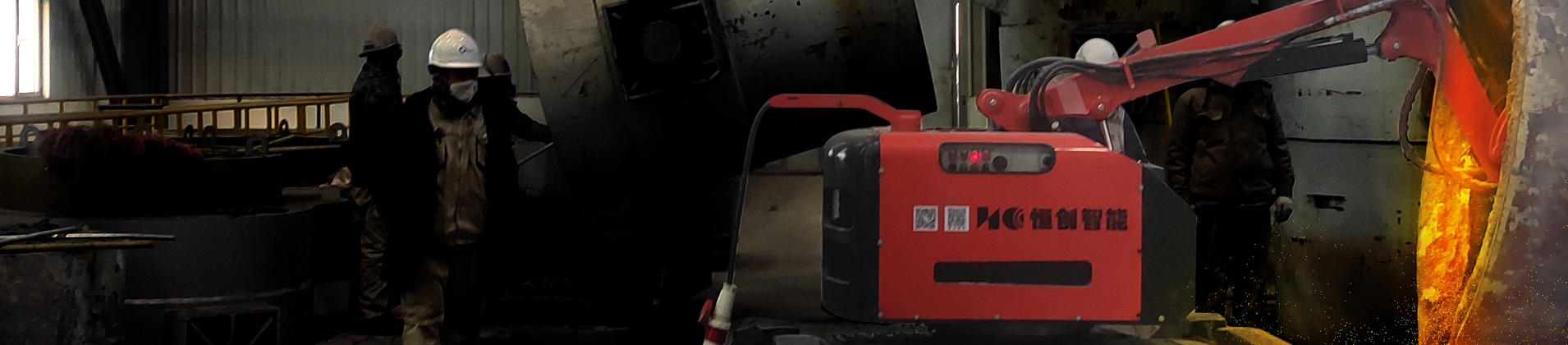
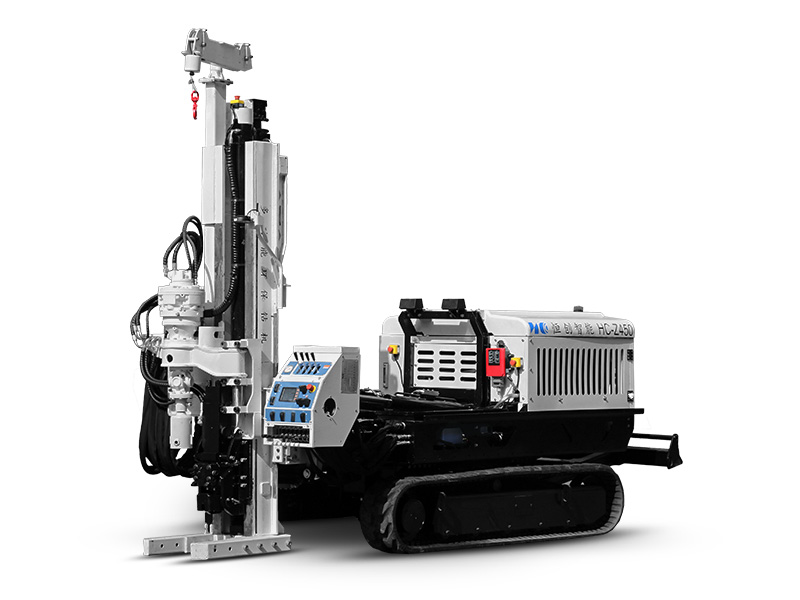
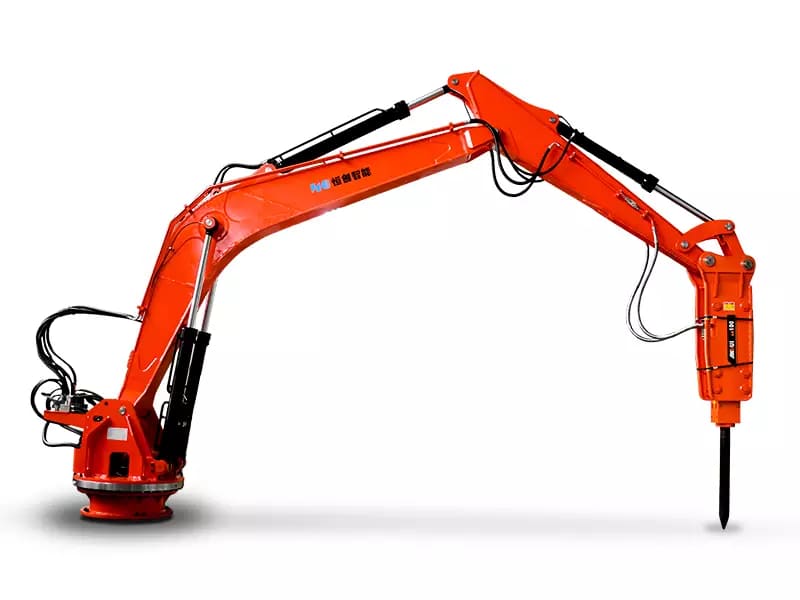
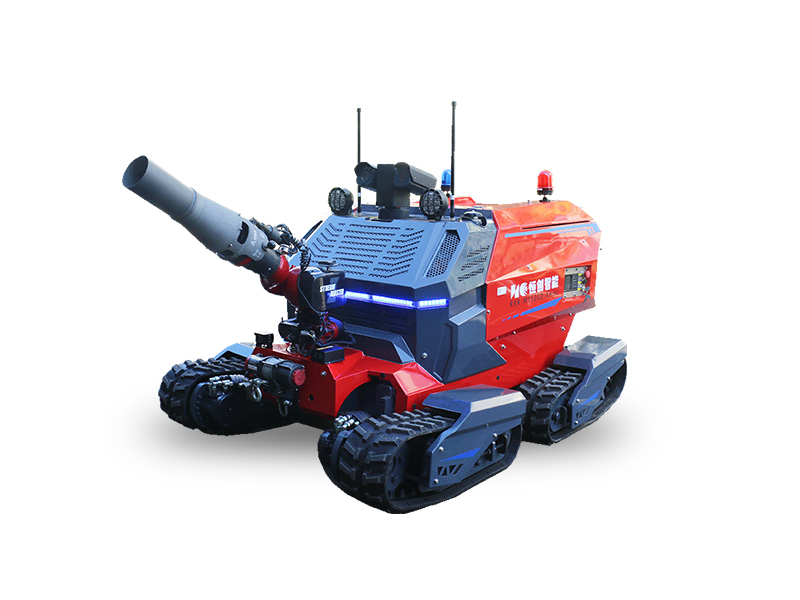
Modern demolition projects demand more than brute force. Contractors now need precision, safety, low emissions, and the ability to work in confined or hazardous areas. That is why the demolition robot has become an increasingly important solution across construction, mining support, infrastructure renewal, and heavy industry. Compact, remote-controlled, and highly versatile, a robotic demolition machine can break, crush, scale, and remove material with far greater control than many traditional methods.
This article explains the top applications of robotic demolition machines for concrete structures, tunnels, and industrial plants, and why they are becoming a preferred tool for complex demolition work.
A demolition robot is a remote-controlled machine designed to perform selective and heavy-duty demolition in places where safety, reach, and maneuverability matter. Unlike large excavators, these machines are compact enough to fit through standard openings, work on upper floors, and operate in restricted environments. At the same time, they deliver strong breaking force through hydraulic breakers, crushers, buckets, and other attachments.
A robotic demolition robot is especially valuable when a project involves:
limited access
dangerous falling debris
unstable structures
high dust or noise sensitivity
indoor work with ventilation limits
precision removal near surrounding assets
Because the operator controls the machine from a safer distance, exposure to vibration, dust, and structural risk is reduced. This makes a robotic demolition machine attractive for both productivity and worker protection.
One of the most common applications of a demolition robot is concrete removal. In building renovation, bridge repair, parking structure upgrades, and foundation modification, contractors often need to remove reinforced concrete without damaging adjacent areas.
A demolition robot performs well in tasks such as:
breaking concrete walls and slabs
removing staircases and elevator shafts
demolishing beams, columns, and balconies
stripping damaged concrete during repair works
cutting access openings in structural elements
Compared with manual jackhammering, the machine improves consistency and reduces labor intensity. Compared with large excavators, it offers better control in tight or elevated spaces. This is particularly useful in urban renovation projects where selective demolition is required and surrounding structures must remain intact.
Tunnels are one of the strongest use cases for robotic demolition equipment. Tunnel environments are narrow, hazardous, and often unpredictable. Loose rock, overhead scaling risks, dust, and poor visibility make manual work dangerous. A robotic demolition robot allows operators to work from a safer position while maintaining precise control.
Typical tunnel applications include:
removing unstable rock surfaces
scaling tunnel crowns and sidewalls
trimming shotcrete and concrete lining
demolishing damaged tunnel sections
enlarging service or access areas
preparing surfaces for reinforcement or repair
Because a robotic demolition machine is compact and electrically or hydraulically efficient, it is suitable for enclosed underground conditions where mobility and reduced emissions matter. In maintenance tunnels, metro systems, hydropower projects, and mining drifts, these machines help improve both safety and operational efficiency.
Industrial plants often contain dense equipment layouts, elevated platforms, steel supports, concrete bases, pipes, and hazardous zones. During shutdowns, maintenance upgrades, or complete decommissioning, demolition must be controlled, phased, and safe.
A demolition robot is commonly used in:
dismantling furnaces and kilns
removing refractory linings
breaking machine foundations
demolishing process platforms
stripping concrete in power plants
removing damaged sections in cement, steel, and chemical plants
In such environments, access is often limited and traditional heavy equipment may be too large. A robotic demolition machine can enter tight work zones, operate on different floor levels, and handle precise removal around valuable infrastructure. This reduces collateral damage and shortens shutdown duration.
Steel plants, cement plants, smelters, and waste treatment facilities regularly need refractory demolition inside furnaces, ladles, kilns, and boilers. These are difficult and dangerous tasks due to heat, dust, confined spaces, and hard material conditions.
A demolition robot is highly effective for:
removing worn refractory bricks
breaking castable linings
cleaning slag build-up
preparing surfaces for relining
accelerating furnace turnaround work
This is one of the most specialized and high-value applications for a robotic demolition robot. Remote operation improves worker safety, while the machine's power-to-size ratio helps contractors achieve faster material removal in confined industrial chambers.
Hospitals, commercial buildings, data centers, tunnels, and transportation hubs often require demolition while parts of the facility remain active. In these cases, dust control, vibration reduction, and precise work zones are critical.
A robotic demolition machine is suitable for:
partial floor removal
interior wall demolition
basement and ceiling work
renovation in occupied buildings
demolition near utilities or equipment
controlled removal before reconstruction
Because the machine is compact and highly maneuverable, it supports phased demolition strategies. Contractors can remove only the required sections while reducing risk to surrounding finishes, systems, and structures.
A demolition robot is also valuable in repair rather than total destruction. Bridges, tunnels, dams, retaining walls, and marine structures often need damaged concrete removed before strengthening or rebuilding can begin.
Applications include:
hydro-demolition support work
removal of delaminated concrete
preparation for rebar replacement
expansion joint area demolition
localized bridge deck removal
rehabilitation of aging public infrastructure
In these projects, accuracy matters as much as speed. A robotic demolition robot allows contractors to target deteriorated zones while preserving sound structural material.
Not every project requires the same machine. Buyers typically evaluate:
breaking power and hydraulic performance
machine weight and transportability
attachment compatibility
reach and working height
power source and site ventilation needs
remote-control stability
service support and spare parts availability
For tunnel work, compact size and reach are especially important. For industrial plants, durability and attachment flexibility matter more. For concrete demolition, the right balance between size, stability, and breaking force usually determines productivity.
The demolition robot has become a practical solution for projects that demand safety, precision, and efficiency. From concrete removal in buildings to tunnel scaling and industrial plant dismantling, these machines solve problems that are difficult for manual labor and inefficient for oversized equipment. As job sites become more restrictive and safety requirements rise, the robotic demolition machine will continue to play a larger role in modern demolition strategy.
For companies seeking advanced demolition robot solutions for concrete, tunnels, and industrial applications, visit https://www.hcrot.com/ to explore suitable equipment and project support options.
The main advantage is safer and more efficient operation. A demolition robot reduces direct worker exposure to dust, vibration, falling debris, and unstable structures while improving demolition speed and precision.
Yes. This is one of its strongest applications. Its compact body, remote control, and high power output make it well suited for tunnels, basements, industrial chambers, and other restricted work areas.
No. It is also widely used for selective demolition, repair preparation, refractory removal, and partial structural modification where controlled material removal is required.