Advancements in artificial intelligence (AI) and robotics have transformed various industries, offering innovative solutions to longstanding challenges. One such breakthrough is the development of firefighting robots—machines designed to combat fires and perform rescue operations in hazardous environments. These fire robots leverage cutting-edge technology to assist human firefighters, often entering areas too dangerous for humans. As the capabilities of AI-driven robotics continue to expand, a pressing question arises: Can these robotic firefighting systems fully replace human firefighters? In this article, we explore the potential of AI in fire and rescue operations, highlighting its benefits, limitations, and the future of firefighting technology.
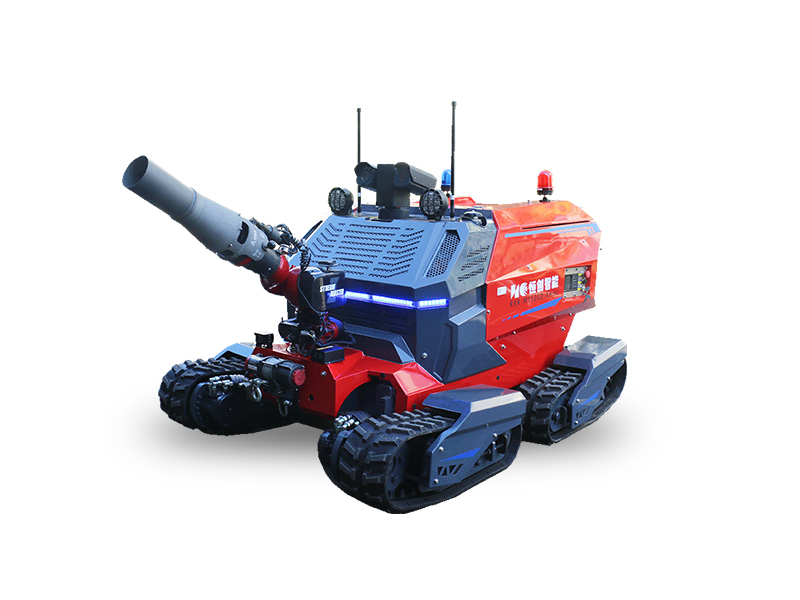
Firefighting robots, also referred to as fire extinguishing robots, are autonomous or semi-autonomous machines designed to perform tasks traditionally carried out by human firefighters. These robots are equipped with advanced sensors, cameras, AI algorithms, and firefighting tools, enabling them to detect, analyze, and extinguish fires efficiently. While their primary role is to assist humans, their design often allows them to operate in extreme conditions, such as high temperatures, heavy smoke, and structurally unstable environments.
One well-known example is the Thermite RS3, a firefighting robot capable of delivering a powerful water cannon stream while being remotely controlled. Robots like these can enter burning buildings or industrial facilities, reducing the risk to human life. Innovations in robotic firefighting systems have also led to the creation of drones that can survey fires from above, aiding in real-time decision-making.
The operation of these fire robots relies on a combination of AI and robotics. Key components include:
These technological advancements make robotic firefighting systems invaluable in high-risk scenarios, such as industrial fires, chemical spills, or wildfires.
The integration of firefighting robots into emergency response teams offers several advantages:
One of the primary reasons for developing fire robots is to reduce the risk faced by human firefighters. Entering burning buildings or tackling hazardous fires exposes firefighters to extreme heat, toxic smoke, and potential structural collapses. Fire extinguishing robots can take on these dangerous tasks, minimizing injury and fatalities among first responders.
Robotic firefighting systems operate with precision and consistency, enabling them to tackle fires more effectively. AI-driven robots can pinpoint fire sources, optimize water or foam usage, and adjust their approach in real-time based on environmental changes. This level of efficiency is particularly useful in large-scale fires or industrial disasters.
Certain fire scenarios, such as those in confined spaces or structurally unstable environments, are too dangerous for humans to enter. Fire robots are designed to navigate these areas, providing critical support and extinguishing flames in places humans cannot reach.
Unlike human firefighters, who may tire or require breaks, firefighting robots can operate continuously in extreme heat or toxic environments. This capability makes them invaluable during prolonged firefighting operations.
Despite their many advantages, fire extinguishing robots have limitations that prevent them from fully replacing human firefighters:
While AI technology has advanced significantly, it still cannot match the critical thinking and adaptability of human firefighters. Complex fire scenarios often require split-second decisions based on intuition, experience, and situational awareness, which robots currently lack.
Most robotic firefighting systems are semi-autonomous, meaning they require human operators to oversee their actions. This dependence limits their ability to function independently in dynamic and unpredictable environments.
Developing and deploying firefighting robots is expensive, making them inaccessible to many fire departments, especially in smaller municipalities. Maintenance and operational costs also add to the financial burden.
Like any technology, fire robots are prone to malfunctions, especially when exposed to extreme conditions for extended periods. A technical failure during a critical operation could jeopardize the success of the mission.
Firefighting involves more than extinguishing flames; rescuing victims, providing emotional support, and working as part of a team are integral aspects of the job. Robots cannot replicate the empathy and interpersonal skills of human firefighters.
While it is unlikely that AI will completely replace human firefighters in the near future, the role of firefighting robots is expected to grow significantly. Future advancements in AI, robotics, and materials science could address some of the current limitations, making robots even more effective in fire and rescue operations.
As AI technology continues to evolve, fire robots may become capable of fully autonomous decision-making, allowing them to operate without human oversight. This development could enhance their effectiveness in complex scenarios.
The combination of ground-based fire extinguishing robots with aerial drones and Internet of Things (IoT) devices could create a comprehensive firefighting ecosystem. Drones could provide real-time aerial surveillance, while IoT sensors monitor fire conditions and guide robotic operations.
Wildfires pose unique challenges due to their scale and unpredictability. Future robotic firefighting systems may include specialized robots and drones designed to combat wildfires, protecting vast areas of land and wildlife.
Rather than replacing human firefighters, robots are likely to serve as valuable teammates. The collaboration between humans and fire robots could lead to more efficient and safer firefighting operations.
The question of whether AI can replace firefighters is complex. While firefighting robots offer undeniable benefits, they are not yet capable of fully replicating the skills, intuition, and empathy of human firefighters. Instead of viewing robots as replacements, it is more accurate to see them as tools that enhance the capabilities of human teams. By taking on the most dangerous tasks, fire robots allow firefighters to focus on critical decision-making and rescue efforts.
Firefighting robots are designed to detect and extinguish fires, navigate hazardous environments, and provide support in rescue operations. They are equipped with sensors, AI algorithms, and firefighting tools to perform these tasks efficiently.
Fire robots face challenges such as limited decision-making abilities, dependence on human oversight, high costs, and the inability to replicate human empathy and teamwork.
While fire extinguishing robots enhance firefighting operations and improve safety, they are unlikely to replace human firefighters entirely. Instead, they will serve as valuable tools to assist humans in high-risk scenarios.