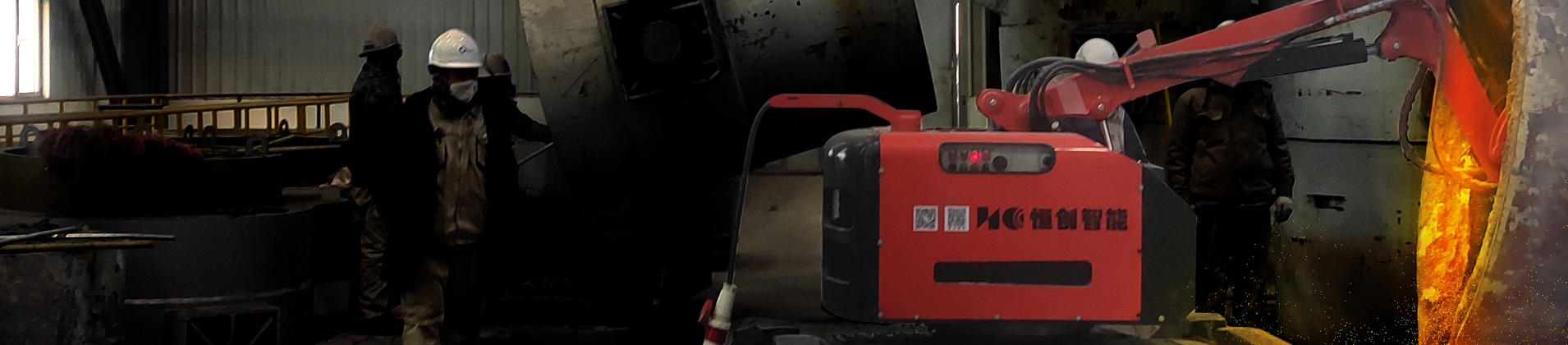
Cement plants present some of the toughest industrial demolition conditions. Maintenance teams often work inside kilns, preheaters, coolers, silos, ducts, and other narrow structures where visibility is poor, temperatures remain high, dust is heavy, and access is limited. In these situations, a demolition robot is often a safer and more efficient alternative to manual demolition or oversized conventional machinery.
A demolition robot is especially valuable in confined cement plant environments because it combines compact dimensions, remote control, hydraulic power, and tool versatility. Instead of sending workers directly into unstable or heat-stressed zones with breakers and handheld tools, operators can control the machine from a safer distance while maintaining precision in tight spaces.
Confined-space demolition in a cement plant is not the same as open-site concrete breaking. These work zones usually involve a difficult mix of constraints:
Narrow access doors, tunnels, and platforms
Thick dust from refractory, clinker, and concrete removal
Elevated residual heat near kilns and furnaces
Poor ventilation and limited operator visibility
Risks from falling material and unstable linings
Restricted room for equipment turning radius and boom movement
A demolition robot fits these conditions because it is compact enough to enter tighter areas, yet powerful enough to break refractory, concrete, build-up, and damaged linings. Compared with larger excavators, it can operate where floor loading, access width, and maneuverability are major constraints.
Not every demolition robot is suitable for cement plant maintenance. The best demolition robot solution should be chosen based on actual plant conditions and shutdown tasks.
A confined-space machine must pass through narrow access points and work on limited floor area. At the same time, it still needs enough hydraulic output for breakers, crushers, and scaling tools.
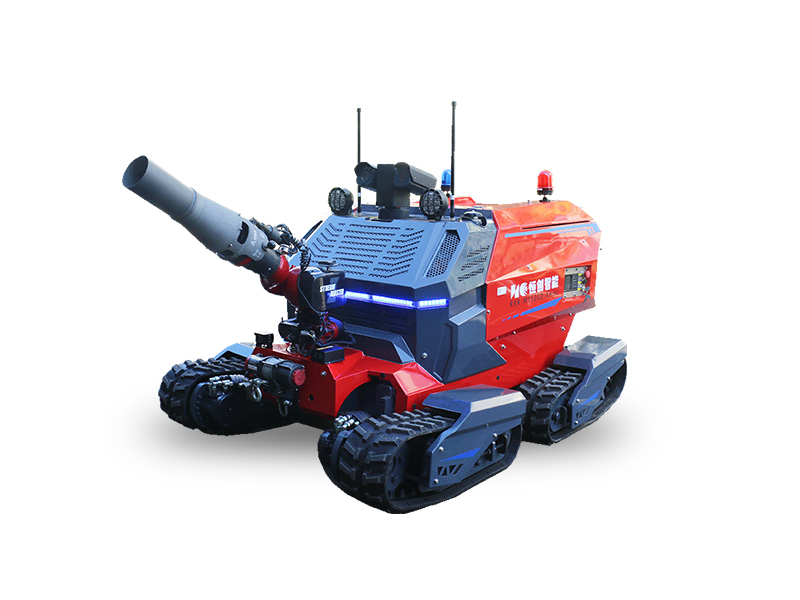
Remote operation is critical in hot, dusty, and hazardous areas. It helps keep personnel away from falling debris, airborne particles, and unstable refractory surfaces.
A cement plant demolition robot should be able to function in heavy dust and tolerate work near high-temperature process zones, especially after partial cooling when residual heat still remains.
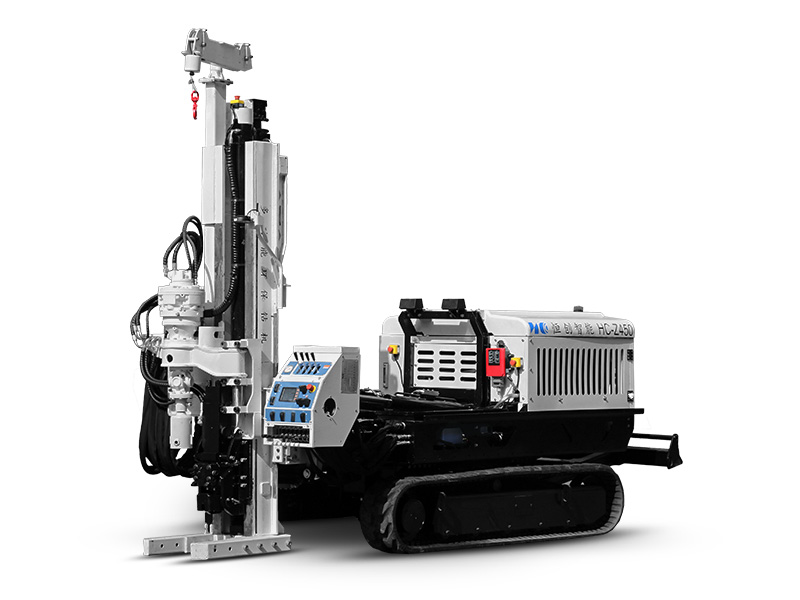
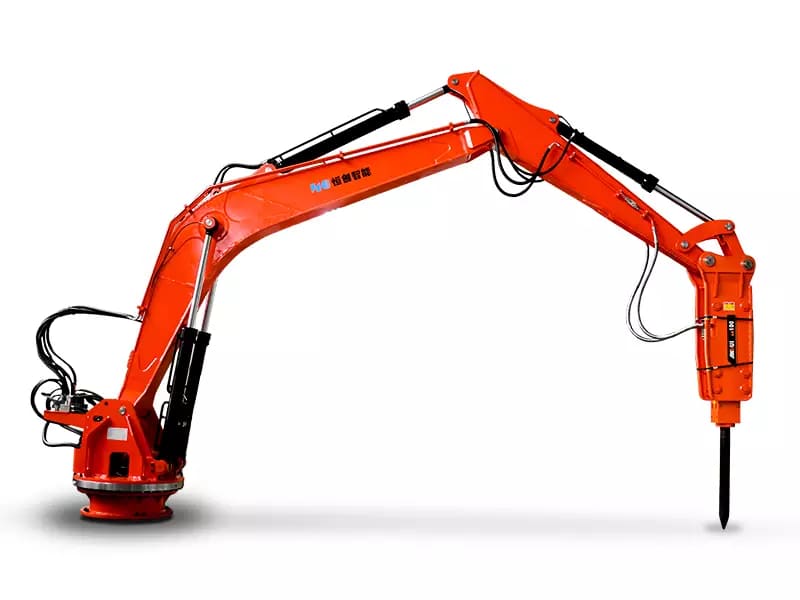
Different jobs require different tools. A demolition robot used in a cement plant should support hydraulic breakers, crushers, buckets, and scaling attachments so one platform can handle multiple maintenance tasks.
Inside confined areas, precision matters more than raw size. Operators need controlled movement for selective demolition without damaging nearby structures, supports, or process equipment.
A demolition robot is well suited for many high-risk plant maintenance scenarios:
Refractory removal inside rotary kilns
Demolition of damaged linings in preheaters and cyclones
Breaking build-up in coolers, chutes, and hoppers
Concrete removal in narrow process areas
Selective demolition during plant upgrades or shutdown retrofits
Work in dusty silos, tunnels, and enclosed industrial chambers
In these settings, the demolition robot reduces direct exposure of workers to dust, heat, vibration, and falling material while improving control over demolition depth and direction.
| Factor | Demolition Robot | Manual Demolition | Large Excavator |
|---|---|---|---|
| Access in confined spaces | Excellent | Good | Poor |
| Operator safety | High due to remote control | Low | Medium |
| Suitability for dusty areas | High | Low | Medium |
| Precision near critical structures | High | Medium | Low |
| Work near residual heat | Better | Poor | Limited |
| Productivity consistency | High | Low to medium | Medium |
| Risk of operator exposure | Low | High | Medium |
This comparison shows why a demolition robot is increasingly preferred for shutdown maintenance and industrial demolition inside cement plants. Manual work may still be used for very small finishing tasks, but for repetitive heavy removal in harsh zones, the demolition robot usually delivers a better balance of safety and efficiency.
Choose a demolition robot with a narrow machine width, compact chassis, and highly articulated boom. The machine should be easy to transport through plant doors, onto platforms, and into tight process sections.
Choose a demolition robot with protected hydraulic and electrical systems, durable cooling design, and stable remote-control response. Dust-heavy cement environments demand equipment that can maintain reliability during long shutdown shifts.
Choose a demolition robot designed for work near hot process equipment, especially where residual heat remains after production stops. Heat shielding, robust hoses, and careful cooling intervals are important in these applications.
If the cement plant handles refractory removal, concrete demolition, and material cleanout in the same outage window, the best solution is a demolition robot platform with quick attachment changes. That gives maintenance teams greater flexibility without moving multiple large machines into restricted areas.
Using a demolition robot in a cement plant is not only about replacing manual labor. It also improves shutdown execution.
First, it can shorten maintenance windows by increasing removal speed in difficult spaces. Second, it improves demolition accuracy, reducing accidental damage to surrounding structures. Third, it lowers worker exposure to common cement plant hazards such as dust inhalation, heat stress, falling debris, and vibration. Finally, it supports more standardized maintenance workflows because the machine performs consistently across shifts.
For plant owners, this means safer outages, more predictable maintenance scheduling, and potentially lower indirect costs caused by delays or safety incidents.
When evaluating suppliers, cement plant operators should ask practical questions:
Has the supplier supported cement plant or refractory removal applications before?
Can the demolition robot be configured for confined, dusty, and hot environments?
What attachments are available for your shutdown tasks?
Is remote control stable and easy for operators to learn?
Are spare parts, service, and technical support available quickly?
The best demolition robot solution is not simply the biggest or most powerful machine. It is the one that matches your plant layout, maintenance scope, access conditions, and safety requirements.
A demolition robot improves safety by allowing remote operation away from dust, debris, and heat. It also provides more consistent productivity and better precision in confined industrial areas.
Yes, a demolition robot can be used in areas with residual heat, provided the machine is selected and operated for those conditions. Proper cooling management and heat-resistant components are important.
Common jobs include refractory removal, cooler build-up breaking, selective concrete demolition, cyclone maintenance, hopper cleanout, and other shutdown tasks in narrow or enclosed spaces.
For cement plants looking to improve safety and efficiency in complex industrial demolition, choosing the right demolition robot is a practical step toward better maintenance performance. To learn more about demolition robot solutions for cement plant applications, visit: https://www.hcrot.com/