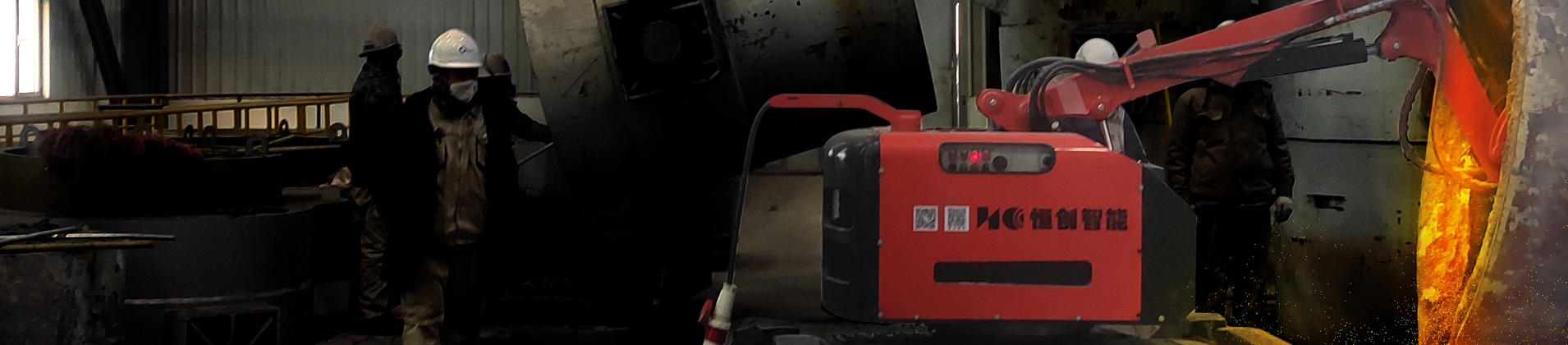
Tunnel construction uses a wide range of equipment, and the exact mix depends on geology, tunnel diameter, excavation method, safety requirements, and whether the work is new construction, enlargement, rehabilitation, or tunnel demolition. In modern projects, one category is becoming especially important in confined and hazardous environments: the demolition robot.
When people ask “What equipment is used in tunnel construction?”, they often think first of tunnel boring machines (TBMs), drill jumbos, shotcrete rigs, loaders, and ventilation systems. Those are all essential. But in many practical tunnel scenarios—especially repair, lining removal, secondary excavation, section widening, concrete trimming, and controlled tunnel demolition—a demolition robot can be one of the most efficient and safest tools on site.
This article explains the main equipment used in tunnel construction, with a special focus on tunnel demolition applications, and why a demolition robot is increasingly preferred over manual breaking or oversized excavators in confined spaces.
Tunnel sites are difficult by nature: limited access, low headroom, poor visibility, dust, vibration, groundwater, unstable rock, and strict safety controls. Because of this, equipment for tunnel work must be selected based on more than just raw power.
Key selection criteria include:
Working envelope (can it fit and move inside the tunnel?)
Reach and precision (especially near tunnel crown and sidewalls)
Safety distance (operator exposure to falling rock or collapsing concrete)
Emissions and ventilation load (electric systems reduce underground fumes)
Mobility and setup time
Tool versatility (breaker, crusher, scaler, bucket, milling head)
Maintenance access
Production efficiency per shift
This is exactly where a demolition robot becomes valuable. A demolition robot combines compact dimensions, remote operation, and high impact force for controlled robot demolition in narrow tunnel environments.
Tunnel construction is not one machine but a coordinated system. The following are common equipment categories.
A TBM is used for continuous mechanical excavation in long tunnels with consistent geology. It is highly productive but expensive and project-specific. TBMs are ideal for many metro, rail, and utility tunnels, but they are not the right answer for every repair or demolition task.
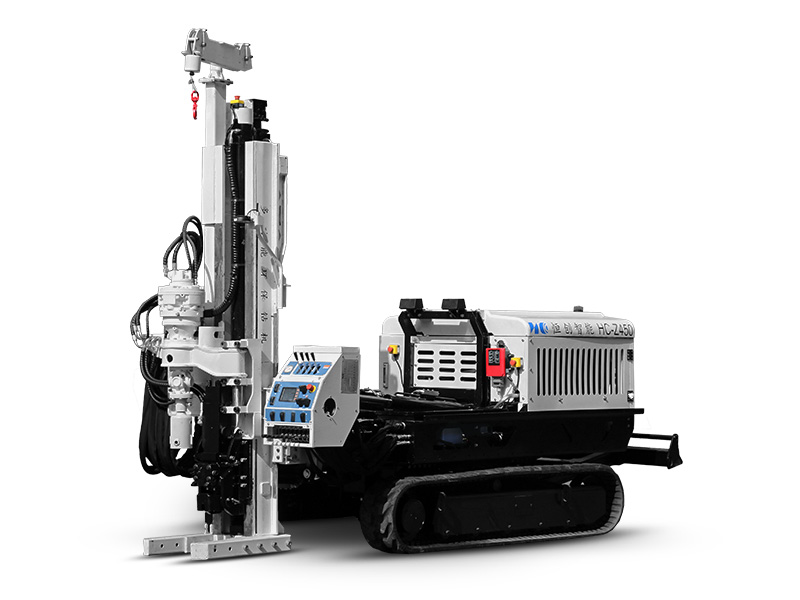
A drill jumbo is used in drill-and-blast tunneling to drill blast holes in rock faces. It may also be used for rock bolting and support installation depending on configuration.
A roadheader is a mechanized cutting machine often used in softer rock or mixed conditions. It provides controlled excavation and can be useful in some tunnel enlargement jobs.
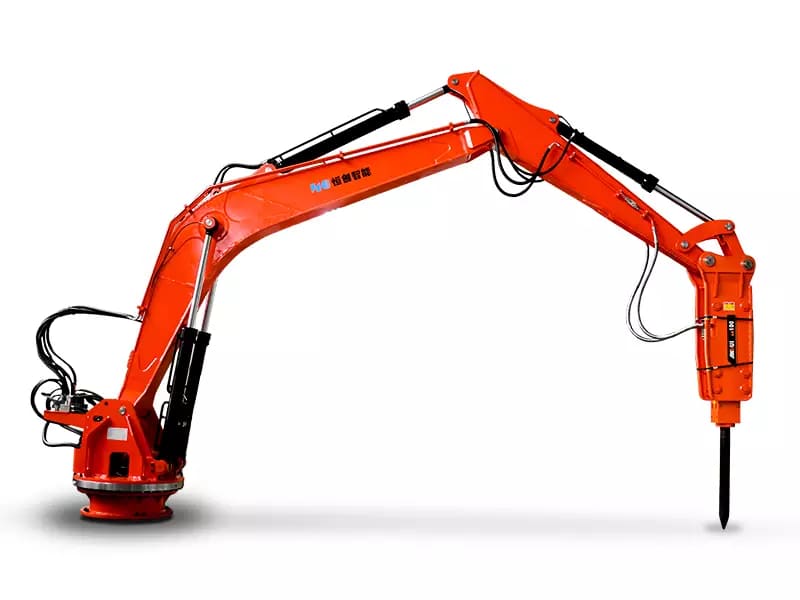
Traditional excavators with breakers are widely used in portals and larger tunnels. However, in tight sections, low headroom, and precise lining removal, they can be less efficient and less safe than a demolition robot.
Used to apply sprayed concrete for immediate ground support after excavation.
Installs bolts to stabilize surrounding rock and prevent collapse.
Used in NATM or segmental lining systems depending on the tunnel type.
Pumps grout for water control, void filling, and ground stabilization.
Load-haul-dump machines remove broken rock and debris.
Transport spoil from the face to disposal or processing areas.
Common in TBM projects for continuous muck removal.
In tunnel demolition, muck handling must also support broken concrete, lining fragments, and reinforced debris. A robotic demolition machine can improve fragmentation control, making loading easier and reducing oversized chunks.
Critical for air quality, dust management, and blast gas removal.
Water spray, misting, and localized extraction reduce airborne particles.
Underground lighting and protected power systems are essential for visibility and safe equipment operation.
Manage groundwater seepage and maintain workable conditions.
Used for deformation, settlement, vibration, gas detection, and structural safety.
Tunnel demolition is not only “tearing down tunnels.” It includes many controlled tasks inside active or partially active tunnels, such as:
Removing damaged tunnel lining
Demolishing old concrete sections before rehabilitation
Enlarging tunnel profiles for upgraded clearance
Breaking invert slabs for drainage replacement
Removing cross-passage walls or temporary structures
Trimming overbreak and correcting geometry
Demolishing fire-damaged or deteriorated sections
Decommissioning utility tunnels or abandoned passages
In these tasks, the goal is not maximum brute force. The goal is controlled removal with minimal collateral damage, which is why robot demolition methods are increasingly used.
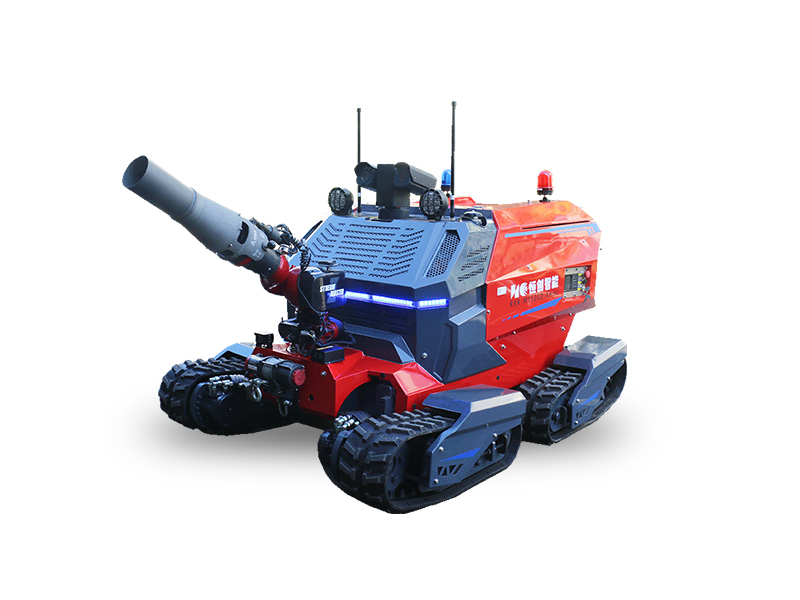
A demolition robot is a compact, remotely operated machine designed for breaking, crushing, scaling, and selective demolition. In tunnel environments, a demolition robot often outperforms manual jackhammer teams and can complement or replace larger excavators in confined zones.
Tunnel demolition can involve unstable rock, falling concrete, rebar rebound, and dust exposure. A demolition robot allows the operator to stand at a safer distance while maintaining visibility and control. This is a major safety advantage over close-contact manual breaking.
A demolition robot is designed to pass through restricted access points and work in low headroom areas. This is crucial in rail tunnels, utility tunnels, and rehabilitation projects where space is limited and shutdown windows are short.
A demolition robot delivers strong hydraulic breaking force relative to its size. This makes it suitable for reinforced concrete lining removal without requiring a large carrier machine.
Tunnel rehabilitation often requires removing only one layer or one damaged zone. A demolition robot supports accurate robot demolition, reducing the risk of damaging adjacent structural elements.
Many tunnel contractors prefer electric or electro-hydraulic equipment underground because ventilation capacity is limited. An electric demolition robot can reduce diesel fumes and help improve air quality.
A robotic demolition machine can be fitted with:
Hydraulic breaker
Crusher
Scaler
Bucket
Grapple
Milling head (depending on model and application)
This flexibility makes one demolition robot useful across multiple stages of tunnel demolition and rehabilitation.
In refurbishment projects, old lining may need partial or full removal before new waterproofing and relining. A demolition robot can break lining in a controlled sequence, reducing overbreak and avoiding unnecessary vibration.
Drainage upgrades often require breaking the tunnel invert. A demolition robot is effective here because it can work in constrained conditions while keeping operators out of the direct impact zone.
When a tunnel must meet updated clearance standards, selective wall and crown trimming may be required. A demolition robot is well suited for this type of robot demolition, where precision is more important than bulk excavation speed.
Creating or modifying emergency niches, equipment bays, or cross-passages may involve removing concrete in narrow sections. A compact robotic demolition machine is easier to deploy than large conventional equipment.
After blasting or partial demolition, loose rock and unstable fragments can be dangerous. A demolition robot equipped for scaling helps stabilize the area before workers re-enter.
Both tools have a place, but the choice depends on tunnel conditions.
The tunnel section is large and accessible
Headroom is sufficient
Reach requirements are simple
Precision is less critical
Diesel ventilation constraints are manageable
Space is restricted
Headroom is low
Safety exposure is high
Selective demolition is required
Emissions must be minimized
Frequent tool changes are needed
The work is tunnel rehabilitation or controlled tunnel demolition
In many projects, the best approach is combined: a demolition robot performs detailed robot demolition in constrained sections, while excavators handle bulk removal and loading where access allows.
A typical tunnel demolition setup may include:
Demolition robot (primary selective breaking unit)
Backup robotic demolition machine or compact excavator
Hydraulic power system / electrical supply
Breaker and crusher attachments
Dust suppression equipment
Ventilation fans and ducting
Lighting tower / underground lighting
LHD or skid loader for debris movement
Dump truck or haulage system
Scaffolding or work platform (if needed)
Survey and monitoring equipment
Gas detection and safety systems
This package supports efficient robot demolition while maintaining safety and production consistency.
Choosing a demolition robot alone is not enough. Performance in tunnel demolition also depends on planning and method statement quality.
Define demolition sequence (crown, wall, invert, zones)
Confirm structural limits and no-go areas
Monitor vibration where adjacent structures are sensitive
Manage dust and visibility continuously
Plan debris size for transport equipment
Schedule maintenance checks for hydraulic tools
Train operators specifically for tunnel robot demolition
A well-operated demolition robot can improve shift output not only by breaking faster, but by reducing stoppages, repositioning time, and manual rework.
Tunnel construction is moving toward safer, cleaner, and more controlled operations. This trend supports wider use of the demolition robot in rehabilitation, infrastructure upgrades, and decommissioning.
As projects become more constrained—especially in urban rail, utility corridors, and aging tunnels—the role of robot demolition will continue to expand. A modern robotic demolition machine is no longer a niche option; it is increasingly a standard tool for contractors who need precision, safety, and flexibility underground.
So, what equipment is used in tunnel construction? The answer includes TBMs, drill jumbos, shotcrete rigs, bolters, loaders, ventilation systems, and support equipment. But when the task involves tunnel demolition, selective removal, or confined-space rehabilitation, the demolition robot is often one of the most important machines on site.
A demolition robot is mainly used for controlled breaking and removal, but it can also support scaling, trenching, and material handling depending on attachments. In tunnel rehabilitation, a demolition robot may perform multiple tasks across the same project phase, which improves utilization and reduces equipment changes.
Robot demolition uses a remotely operated machine to deliver hydraulic force with better reach, safety distance, and consistency. Manual jackhammer work may still be used for minor finishing, but for larger tunnel demolition scopes, a demolition robot usually provides better productivity and lower operator exposure to dust, vibration, and falling debris.
Select a robotic demolition machine based on tunnel dimensions, access limits, concrete strength, reinforcement density, power availability (electric vs diesel support systems), required attachments, and target production rate. For tunnel demolition, the best demolition robot is the one that balances compact size, reach, stability, and attachment compatibility for your specific tunnel conditions.