In demolition projects, choosing the right machine can directly affect safety, productivity, and total operating cost. While excavators remain essential for large-scale outdoor demolition, they are not always the best option for tight, hazardous, or structurally sensitive environments. In these conditions, a demolition robot often delivers clear advantages. From basements and tunnels to factories, power plants, and narrow urban renovation sites, robotic demolition technology is changing how contractors approach difficult jobs.
An excavator is a heavy machine designed for digging, lifting, breaking, and material handling, usually in open environments with enough room for movement. It is powerful, versatile, and widely used across construction and demolition.
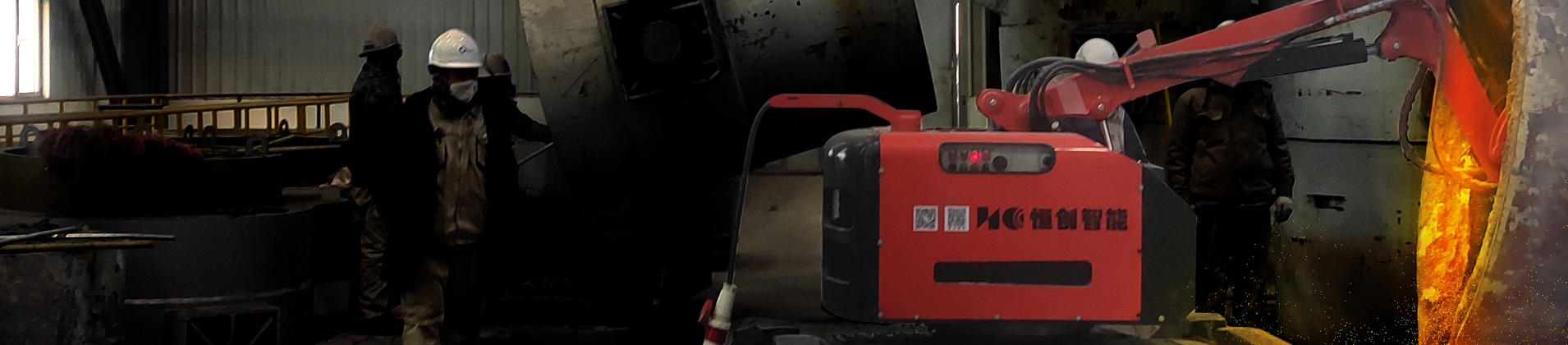
A robotic demolition machine, by contrast, is compact, remote-controlled, and purpose-built for high-precision demolition in restricted work areas. Most robotic demolition equipment is smaller in size but engineered to deliver impressive power relative to weight. With attachments such as hydraulic breakers, crushers, buckets, drills, and grapples, these machines can perform selective demolition where full-sized equipment simply cannot operate efficiently.
The real difference is not only size. It is about access, control, and safety.
Confined spaces create challenges that standard machinery struggles to solve. These environments may include:
Narrow corridors
Low-ceiling basements
Underground tunnels
Industrial plants
Furnace areas
Stair-access renovation zones
High-risk structures with limited load-bearing capacity
In these settings, machine width, height, maneuverability, ventilation impact, and operator exposure all become critical factors. A traditional excavator may be too large to enter, too heavy for the floor, or too difficult to position accurately. This is where a demolition robot becomes the stronger choice.
The biggest advantage of robotic demolition equipment in confined spaces is its compact footprint. A demolition robot can pass through standard doorways, fit into elevators, and work in tight interiors where excavators cannot enter without structural modifications.
Despite their smaller dimensions, modern robotic demolition machines are designed for strong hydraulic performance. They can break concrete, remove brick walls, chip tunnel surfaces, and handle precise structural demolition with a high power-to-weight ratio. This combination allows contractors to work faster in areas where manual labor would otherwise be slow and risky.
In many indoor or underground jobs, the question is not whether an excavator is powerful enough. It is whether it can even reach the work zone. A demolition robot solves that problem directly.
Safety is one of the most important reasons why robotic demolition continues to grow. Demolition often involves unstable structures, falling debris, vibration risks, dust exposure, and limited escape paths. Putting an operator inside or directly next to a machine in these conditions increases danger.
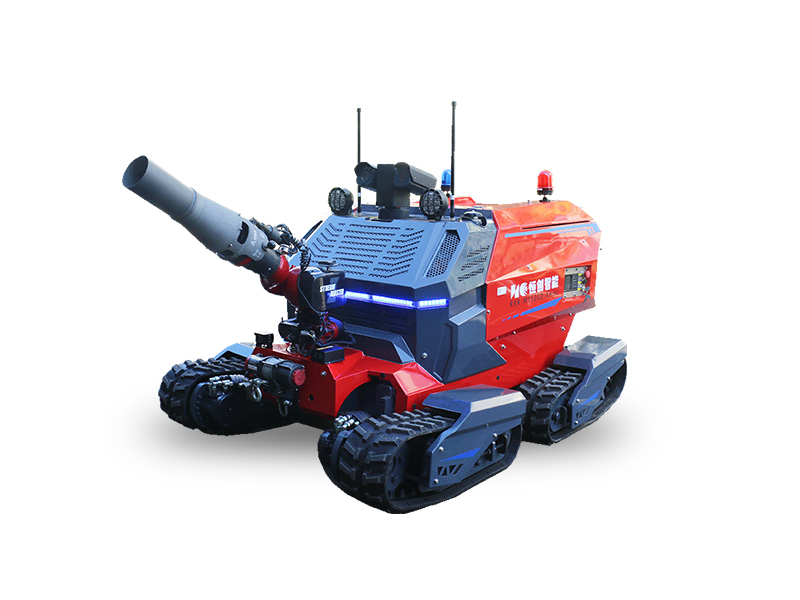
A demolition robot is operated remotely, allowing the operator to remain at a safer distance from the demolition face. This is especially valuable in:
Fire-damaged buildings
Chemical plants
Mining tunnels
Nuclear or high-temperature areas
Structures with collapse risk
Compared with excavators, remote-controlled robotic demolition equipment reduces direct human exposure while maintaining excellent machine control. For contractors focused on safety compliance and workforce protection, this is a major operational benefit.
Not every demolition job requires brute force. In many renovation and industrial projects, contractors must remove one section while protecting nearby walls, beams, pipes, cables, or operating equipment.
This is where robotic demolition has a clear edge over excavators. A robotic demolition machine offers more precise control in restricted work zones. Operators can make detailed, controlled movements and remove concrete or structural elements section by section. This helps reduce unnecessary damage and lowers the risk of impacting surrounding assets.
Selective demolition is particularly important in hospitals, commercial buildings, utility tunnels, and production facilities where nearby systems must remain intact.
Weight matters in confined and indoor demolition. Full-sized excavators can place heavy loads on floors, ramps, and suspended structures. In older buildings or elevated slabs, that weight may create structural concerns.
A demolition robot is much lighter, making it better suited for upper-floor demolition, basements, and load-sensitive environments. Many units can also climb stairs or be transported in parts, which improves access where cranes or ramps are impractical.
For contractors working on renovation projects inside occupied or partially active buildings, lightweight robotic demolition equipment offers a practical and often necessary solution.
When excavators cannot access the site, contractors often rely on manual demolition using jackhammers and hand tools. This approach is labor-intensive, slow, and physically demanding. It also increases dust exposure, fatigue, and schedule risk.
A demolition robot bridges the gap between manual demolition and large machinery. It provides mechanized breaking force in spaces too small for an excavator, significantly improving output and consistency. In many confined-space projects, this leads to shorter project timelines and lower labor costs.
For businesses looking to improve productivity without compromising site access, robotic demolition equipment is often the most efficient solution available.
Another reason a robotic demolition machine outperforms an excavator in confined spaces is attachment flexibility. Depending on the project, the same machine can be fitted with:
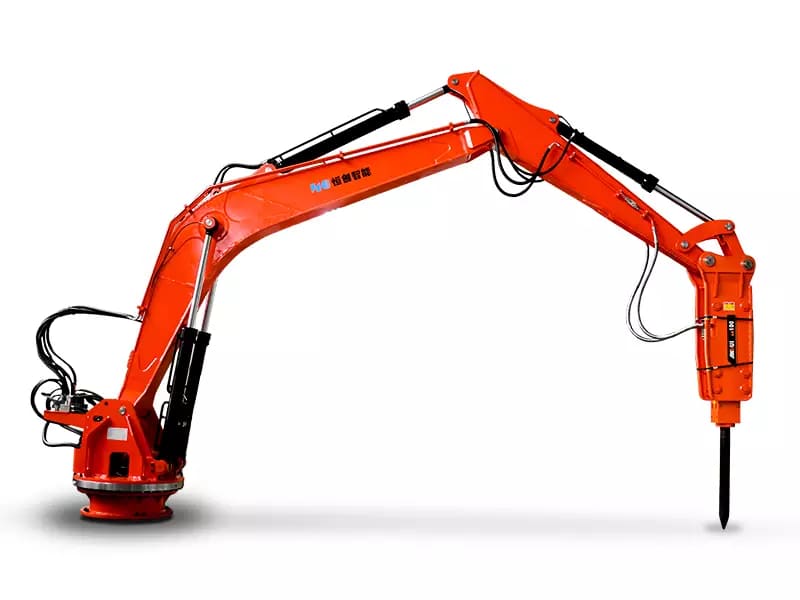
Hydraulic breakers
Concrete crushers
Buckets
Steel shears
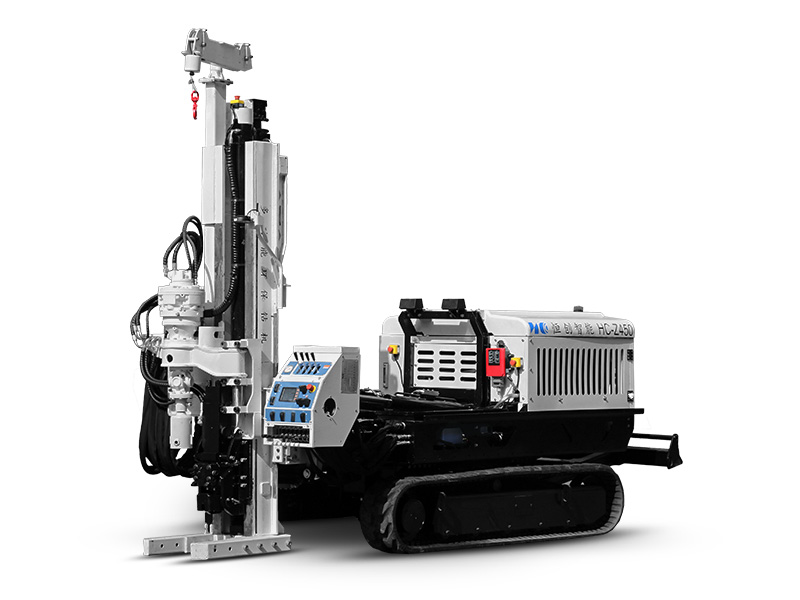
Drills
Grapples
Scaling tools
This allows one demolition robot to handle multiple tasks in a single project phase. Instead of bringing in several machines or relying on separate manual crews, contractors can complete demolition, material removal, and surface preparation with one compact platform.
That versatility is especially valuable in tunnels, mining applications, and industrial shutdown work where space and time are limited.
Excavators remain the better choice for some demolition applications, especially:
Large open-site demolition
Heavy material loading and hauling
Bulk structural teardown
Earthmoving and site clearing
Projects with easy access and no space limitations
In other words, excavators are excellent when room is available and the task depends on reach, lifting capacity, and large-scale material handling. But in confined environments, those strengths become less important than precision, mobility, and safe access.
The debate between a demolition robot and an excavator is not about which machine is universally better. It is about which machine is better for the job. In confined spaces, the advantages of robotic demolition, including compact size, remote control, precision, lighter floor load, and versatile attachments, make it the clear winner.
As more demolition projects move into urban renovation, industrial maintenance, tunnel construction, and indoor structural modification, demand for robotic demolition equipment will continue to grow. Contractors who adopt the right robotic demolition machine for these challenging environments can improve safety, efficiency, and project quality at the same time.
To learn more about advanced demolition robot solutions, visit: https://www.hcrot.com/